The short version
KLOW is not extracted from tissue as a blend. The peptides are made chemically, one component at a time, then combined.
The bench photographs are illustrative lab scenes. They do not show a specific manufacturer’s facility. The pen and vial photograph later on this page is the seller’s product, not a factory.
The general method
Solid-phase peptide synthesis builds a chain on a tiny resin bead, one amino acid at a time. Bruce Merrifield introduced the method in 1963. It is now automated.1
The growing chain stays attached to the bead, so leftover reagents can be washed away between additions. When the chain is finished, it is released, and chromatography separates the intended peptide from shorter or flawed chains. That is the general method used for peptide components of this kind. This page does not specify protecting groups, solvents, temperatures, or quantities.1,2
GHK-Cu is the copper complex of the glycyl-L-histidyl-L-lysine tripeptide. The complex is a description of that component. This page does not describe how the copper is added.
From chains to a fill
-
01
Separate chains
Make each peptide
KPV, BPC-157, the TB-500 fragment, and GHK are each assembled as their own chain. They are not grown as one 15-residue sequence.
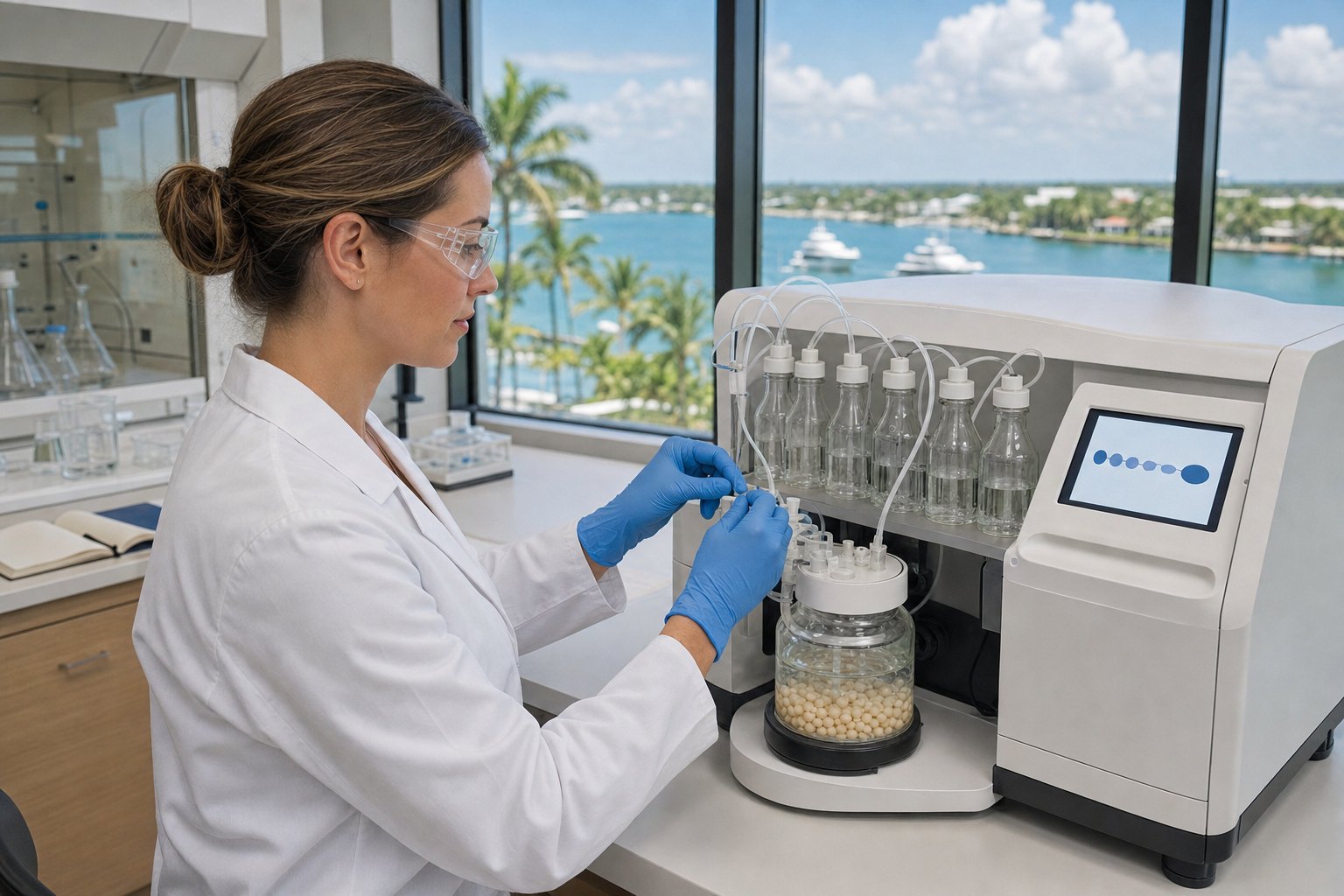
Illustrative lab scene, not a specific facility. -
02
Release
Take each chain off the resin
The finished chain is cut free of the bead. What remains is crude peptide, still to be separated from the mistakes of synthesis.
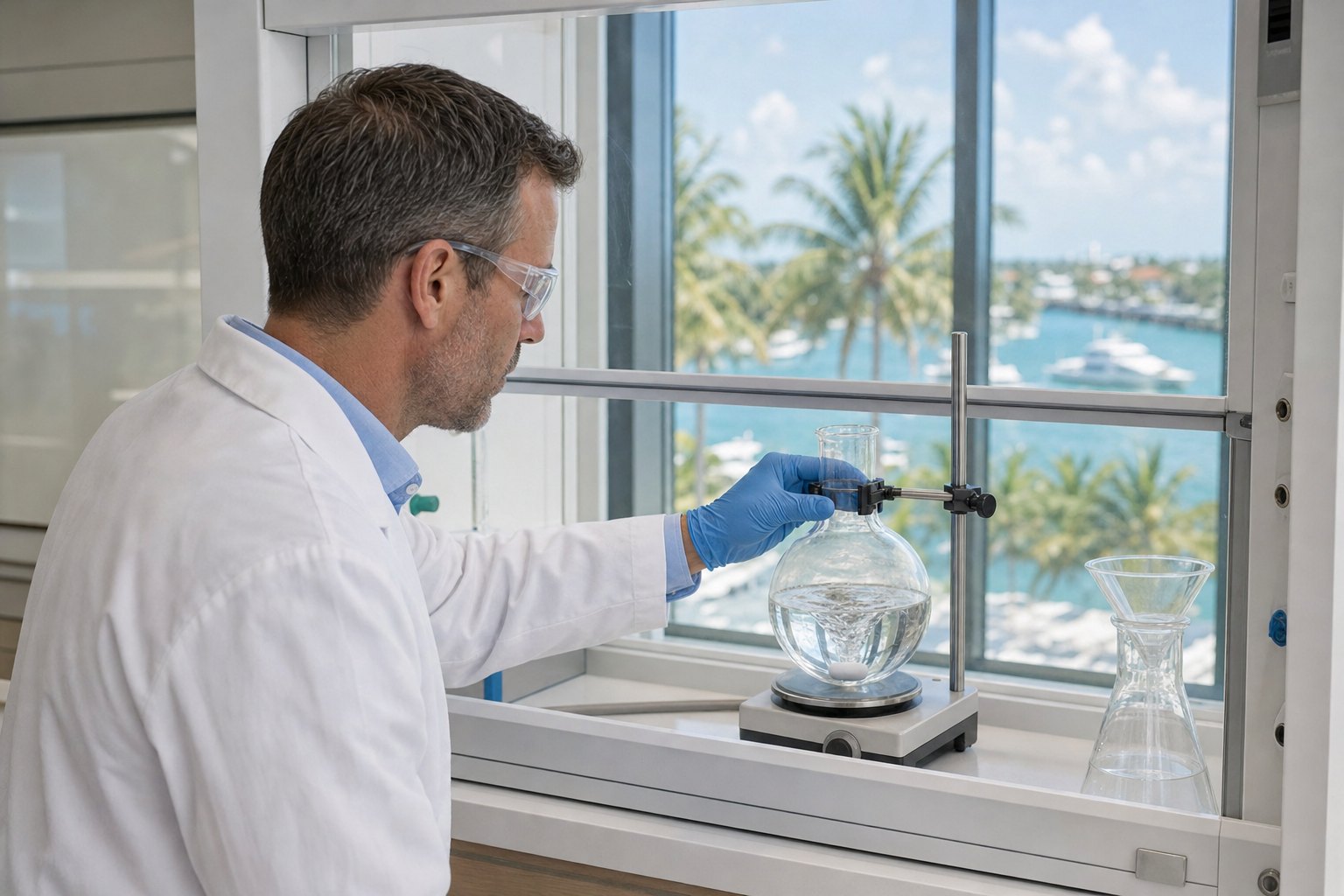
Illustrative lab scene, not a specific facility. -
03
Purification
Separate, then identify
HPLC separates the intended peptide from shorter chains. A later test checks that the material is the peptide named on the label. The KLOW pen’s own chromatogram is on the testing page. The picture below is not that chart.
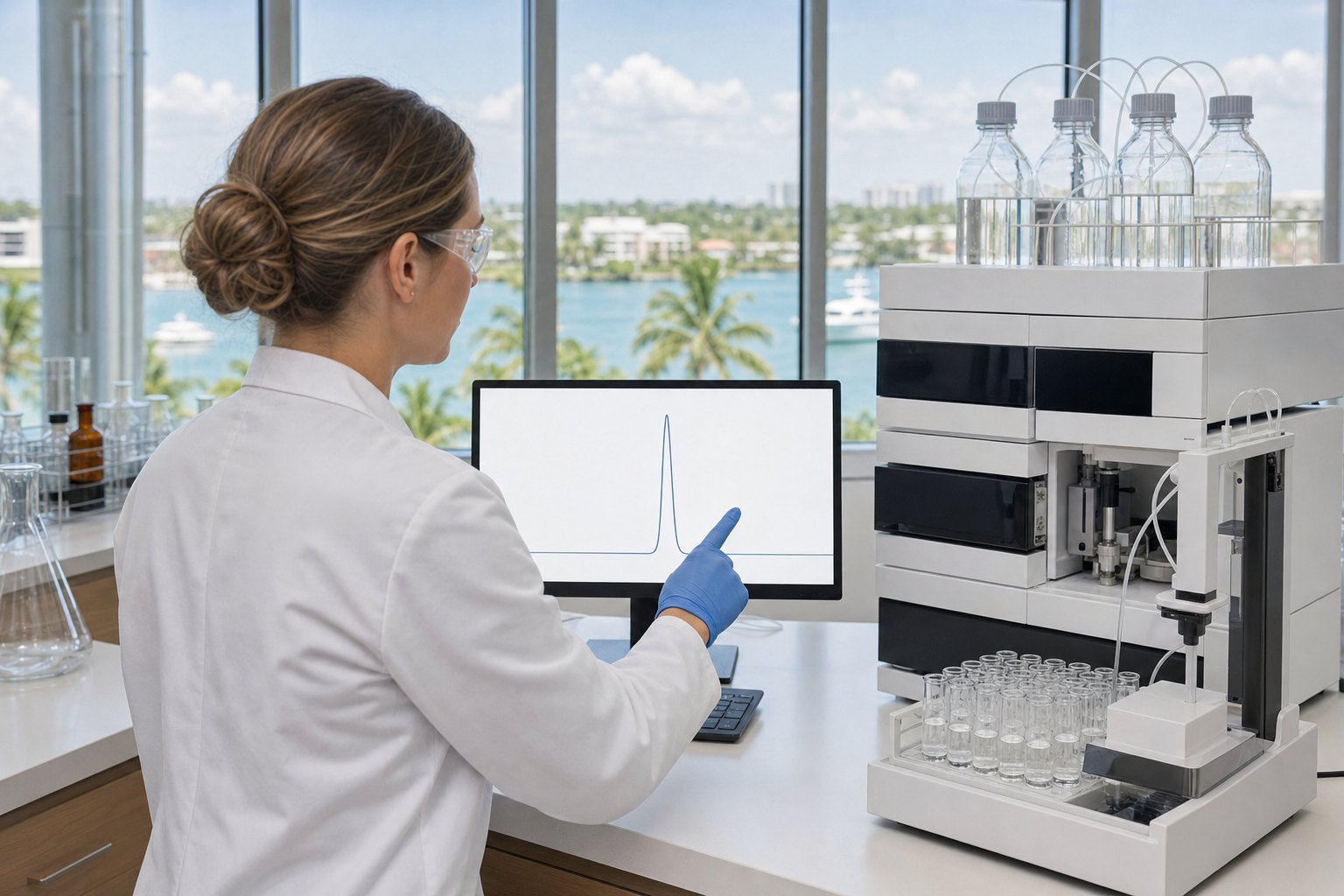
Illustrative lab scene, not a specific facility, and not the Accumark chromatogram. -
04
Combine
Put the four in solution
The purified components are combined in aqueous solution. The seller describes that solution as an acetate salt form. The pen and the vial are filled from solution. They do not ship as dry powder.
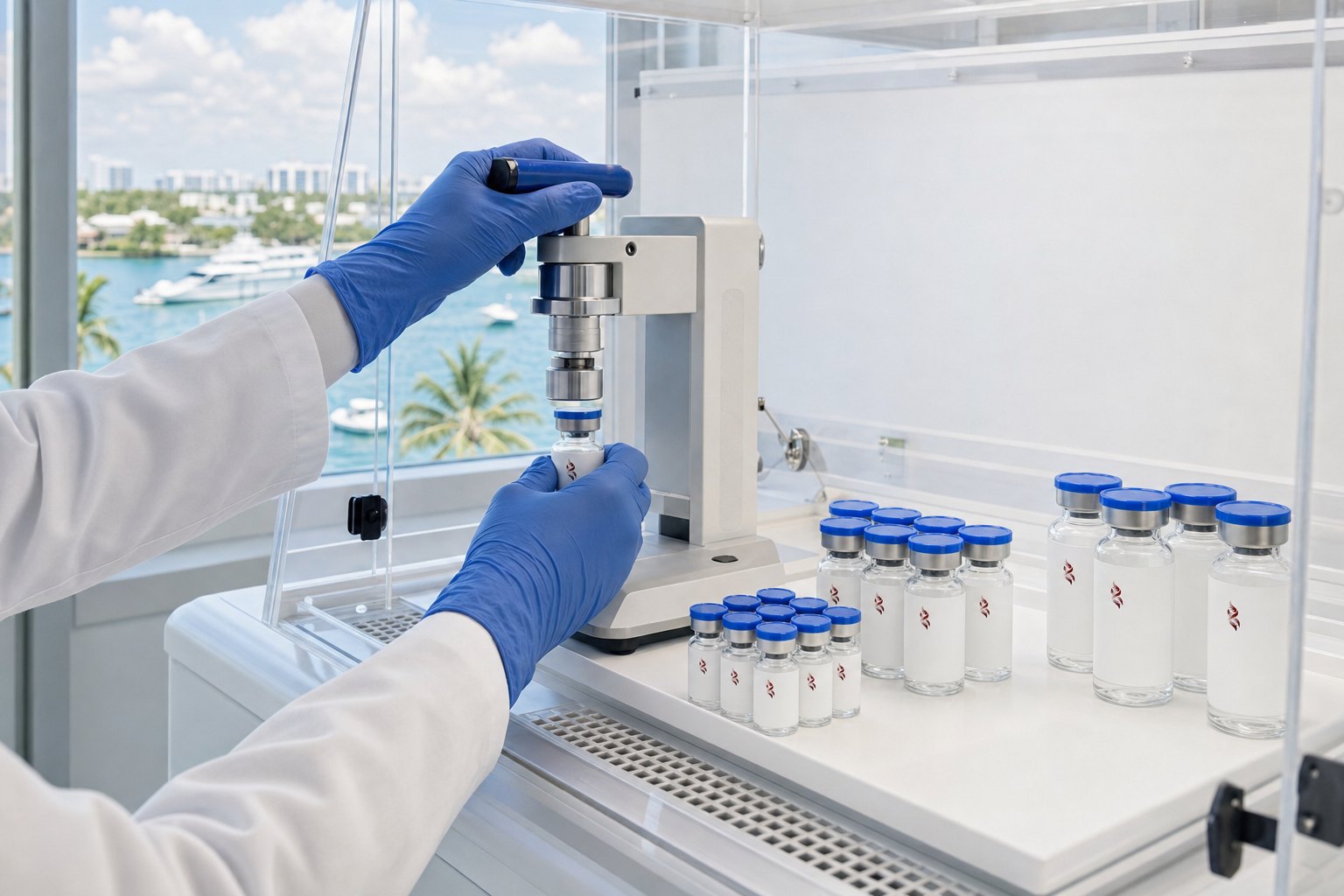
Illustrative lab scene, not a specific facility. -
05
Bulk powder
Freeze-drying is a different order
The seller offers freeze-dried KLOW as a bulk order. The vial page says to make contact, and that a minimum applies. The pen and the liquid vial are not that powder. This site does not give a reconstitution guide.3
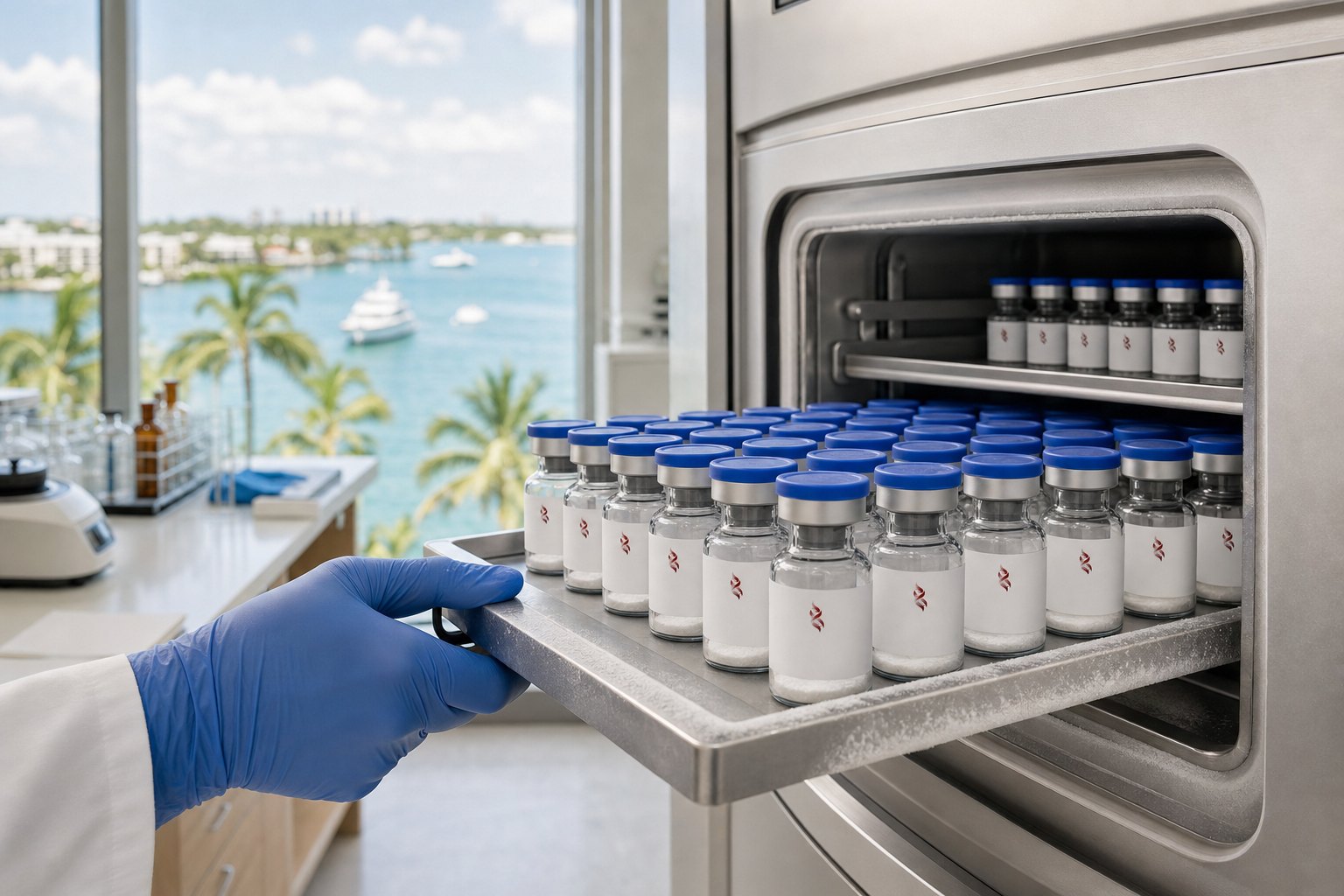
Illustrative lab scene, not a specific facility. The catalog pen and vial are already liquid. -
06
The catalog
Fill the pen or the vial
The solution is filled into a 3 mL pre-filled pen or a 10 mL vial and labeled with a lot number. The photograph is the seller’s picture of the pen.
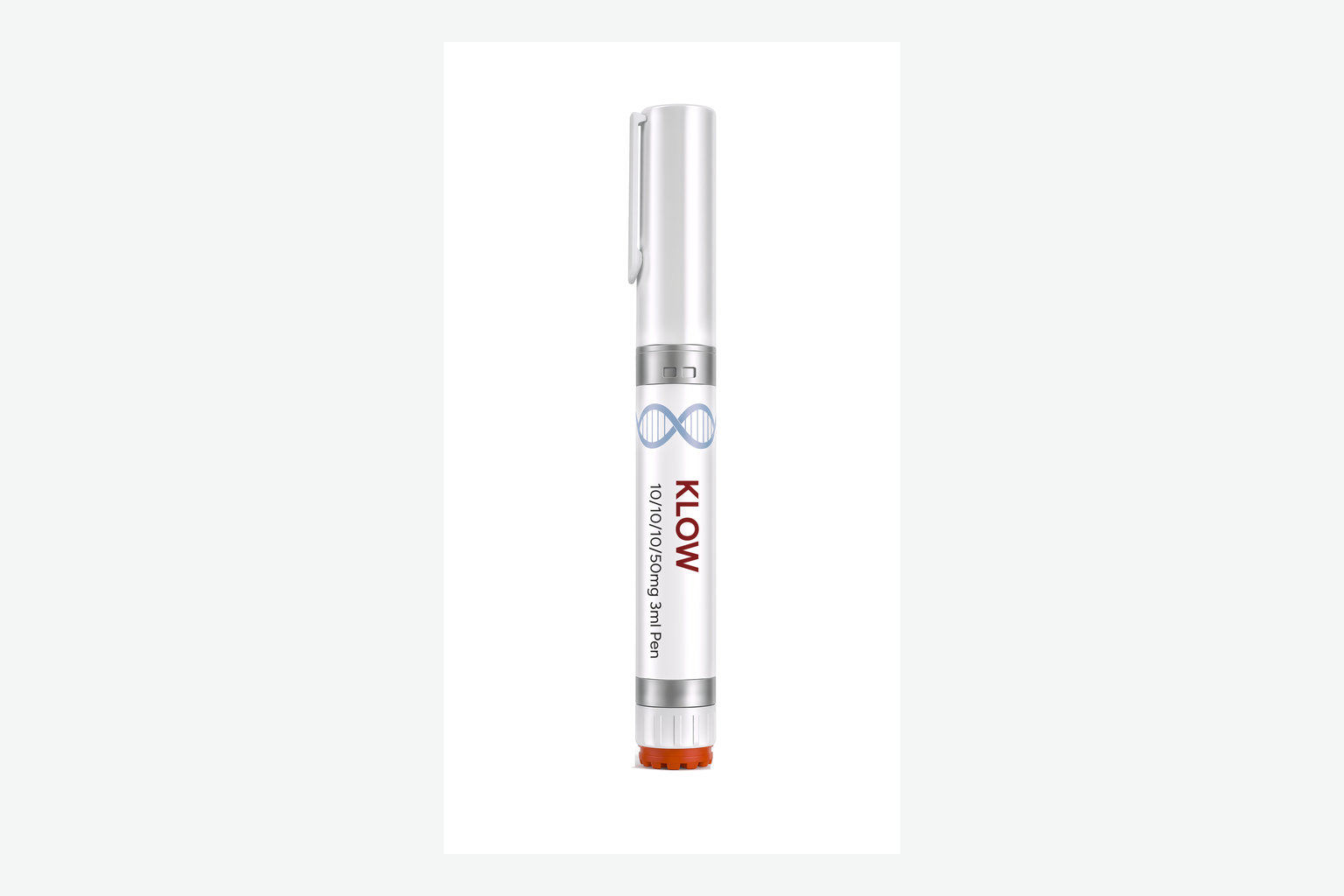
Palm Beach Vitality’s photograph of the KLOW pen. Not a factory photograph.
Not one chain
BPC-157 is a 15-amino-acid peptide, and it is one of the four components. KLOW is the four of them in one solution.
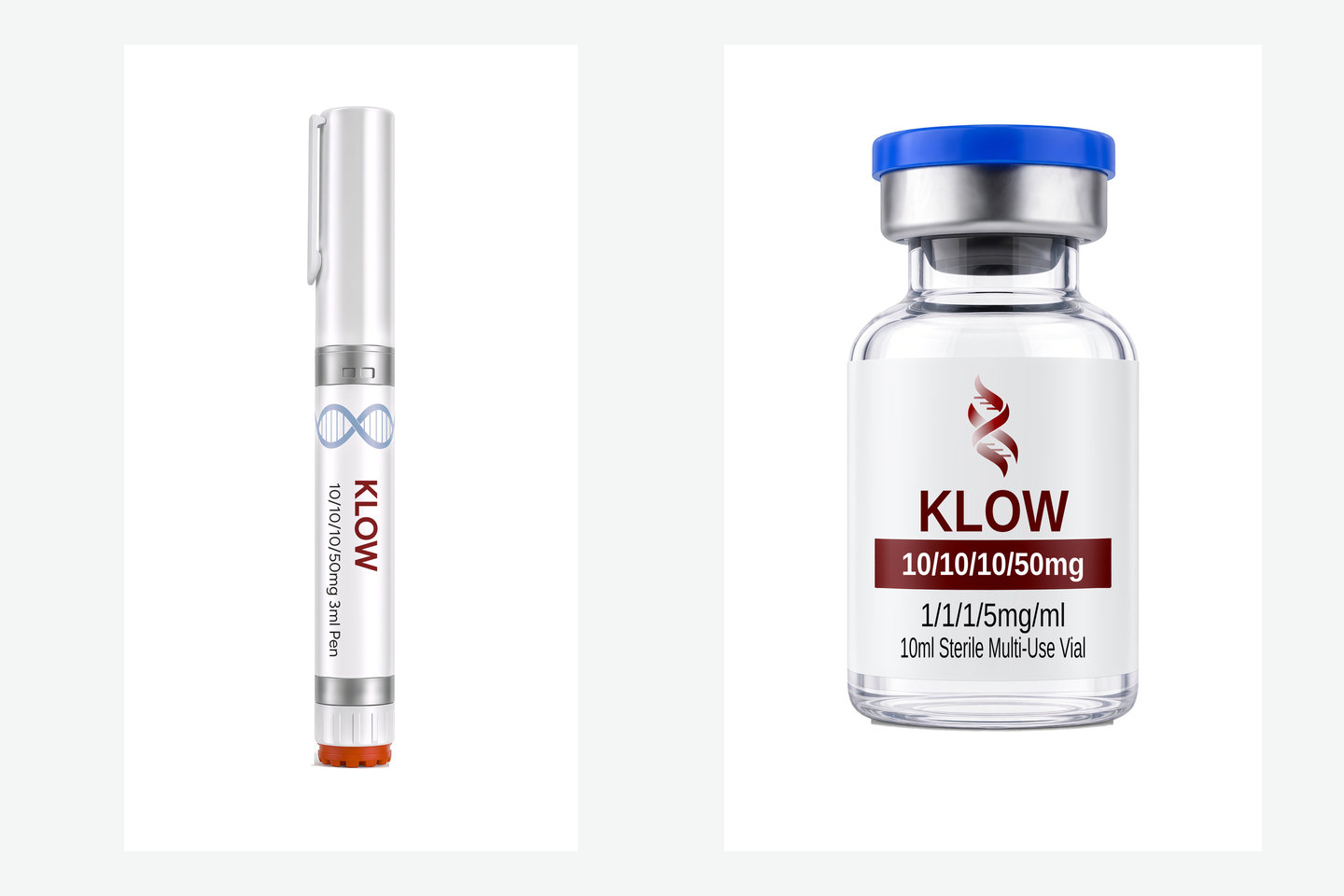
Four peptidesOne solutionNot one chain
Sources
- Merrifield RB. Solid phase peptide synthesis. I. The synthesis of a tetrapeptide. J Am Chem Soc. 1963;85:2149–2154. doi:10.1021/ja00897a025
- Behrendt R, White P, Offer J. Advances in Fmoc solid-phase peptide synthesis. J Pept Sci. 2016;22(1):4–27. doi:10.1002/psc.2836
- Palm Beach Vitality. KLOW Pen and KLOW Vial product pages, checked November 18, 2026. palmbeach-vitality.store